Anxiety is an issue for many on the autistic spectrum. Here are some simple ideas on dealing with anxiety, courtesy of AsapTHOUGHT
tips
How to Pack a Month’s Worth of Stuff Into a Tiny Bag
Talking Slower Can Reduce Social Anxiety
Like many autistics, I suffer from social anxiety. Recently, it occurred to me that maybe I talk too fast, and that other people find this off-putting (which creates a vicious cycle, where I sense they find my behavior strange, and that makes me even more anxious!). So I decided to make an effort to talk a little slower. The experience so far has been positive. People tend to react more calmly and pleasantly if you talk to them slowly, and their positive response helps you calm down as well.
I wondered if other people had thought of slowing down as a way of dealing with social anxiety. Turns out, it’s standard practice in cognitive behavioral therapy (CBT) for social anxiety. Furthermore, if you have a high-pitched voice, people tend to take you less seriously (and you sound more anxious), so in that case consider lowering pitch too. Slowing down all your movements may help as well, but don’t over-do it or you’ll look like a zombie! It takes a little getting used to, and may feel a bit awkward at first. If you’re absent-minded like me, it helps to set a daily reminder. Here’s a video I found that explains some of the benefits of talking slower:
Seasonal Tip: Gift-Wrapping Hack
The Downside of Efficiency
[content reblogged]

Yup. You read the title right—the downside of efficiency. How can there be a downside to efficiency? Let me enlighten you.
For those of you who are Type A personalities or recovering Type A personalities, or who have learned to be efficient by force of nature (like many special needs parents or folks facing huge challenges), you will face some problems. How do I know? I live it.
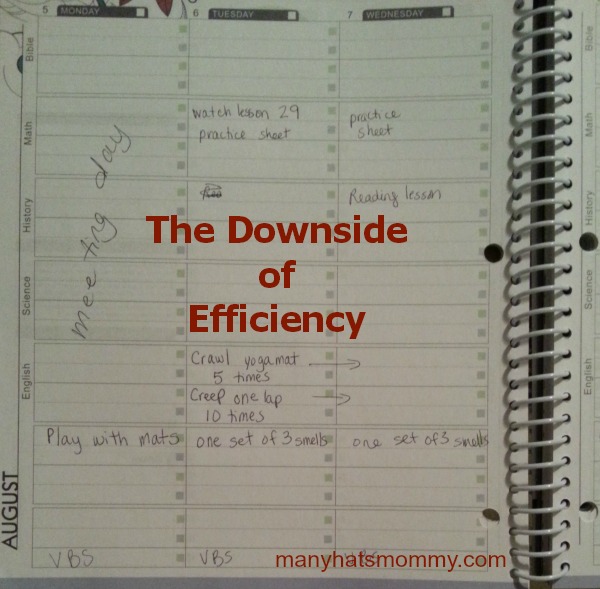
Here are four side effects of efficiency that should be labeled on the bottle or mentioned in the commercial voiceover:
View original post 672 more words
Love is NOT All You Need (Real-World Marriage Tips)
[content reblogged]

I spent a good deal of time studying what it is that makes a “good marriage”. Then, I went out and actually got myself married. I took that handbook, that was so well-written and painstakingly researched, and tossed that puppy out of the nearest window. Marriage is not about theory or research. It is about getting in, rolling up your sleeves, and digging in your heels for life. Because one thing I know for certain about being married: if you sit around thinking that there are hard and fast rules…the last argument that you will ever have will be inside of a lawyer’s office.
Notice that I never used the “buzzwords” in the title that you normally see when discussing marriage advice. I will never use the words: successful, happy, or loving to describe my philosophies. Just practical, real-life stuff here. Happy is all about perspective, this is just…
View original post 1,525 more words
Ways to Break the Ice and Start a Conversation
Conversation is a challenge for many on the ASD spectrum, due to problems understanding non-verbal cues and unspoken rules. This video is an excerpt from a longer talk by Don Gabor of The Learning Annex. It gives some quick useful tips on starting and managing a conversation:
1) Ask an easy-to-answer open-ended question (without a “yes” or “no” possible answer).
2) Make a positive comment.
3) Offer sincere compliments.
4) Refer to something the person’s said to make a connection.
5) Stop focusing on yourself and your inner monologue, instead, LISTEN![Quoted from the YouTube page]
Great Tips on Public Speaking
Giving a talk is probably the autistic’s worst nightmare, but with careful prepping very little can go wrong. Here’s a straightforward blog post on ‘How to Rock Your Next Talk’ by Eric Karjaluoto, Creative Director at smashLAB. Just lots of practical tips, no BS. The excerpt below is typical of his down-to-earth advice:
I rehearse my completed talk a good 5 times before leaving home and I re-read my presentation on the plane. Upon arriving at my destination I go to the hotel, shut the door, and move the furniture. I walk that room back and forth like I’m on stage, and I practice until I feel that I could deliver my presentation without any slides. I even turn on the television—as a deliberate distraction—and practice my talk with the TV running in the background (good practice for when someone’s mobile phone rings during your presentation).
 DESIGN FOR ASD