Successful Career Women with Asperger’s Syndrome

A nice little article from the Mail Online about high-achieving women with Asperger’s, and how they cope with the condition. A few choice quotes below, just to give some idea of what Asperger’s is like –

Sarah has also got herself into trouble at work several times by repeating other people’s jokes and comments without understanding that they were inappropriate.

‘For example, I’ve gone up to people in the office and said things like: “You must be ‘Octopus Mike’ or ‘Orange John” — the secret nicknames people have given them.’

‘I’m very sensitive to light and noise, so with 200 people all working in one room, it can feel like fireworks going off in front of my eyes — and as if people are banging saucepans in my ears. I often have to escape for half an hour, count to ten, and get my thoughts in order before I can go back.’

‘It takes me at least two hours in the morning to prepare for work. I lay all my clothes out the night before and have a set routine, but if my husband moves something and it isn’t where I expect it to be, that can add an hour to my day.’

Read more: http://www.dailymail.co.uk/femail/article-2188423/They-successful-career-women-loving-relationships–live-affliction-surprise-you.html#ixzz2GPVnMIG2

Follow us: @MailOnline on Twitter | DailyMail on Facebook

Montre Sticky Note Watches

Absent-mindedness or ‘brain fog’ goes with many autistic disorders, and everyone has their favourite way of dealing with it. If you’re the sort who likes simple, hands-on solutions, this product may be for you. It’s basically a sticky note that wraps around your wrist. One way to use it – draw a clock-face and mark your appointments around the face, then write the details on the strap. Available from PA Design in France. Via Better Living Through Design.

Understanding Asperger Syndrome: A College Professor’s Guide

There are many autistic students in higher education, especially since some autistics (particularly those with Aspergers or NLD/NVLD) have above-average verbal or math skills, or a strong interest in a particular topic. It would be good for college professors to have some idea of how to spot students on the autistic spectrum, and how to meet their specific needs. The following videos by the Organization for Autism Research (OAR) aim to equip teachers in higher education with some basic knowledge to help them in facilitating learning for autistic students.

November 1 each year is Autistics Speaking Day, when people on the spectrum are encouraged to tell their own stories on social networking sites and blogs. The aim is to raise awareness and acceptance of autism; and show that behind the stereotypes are a diverse range of individuals with very different stories, some common experiences, and much to contribute if given a chance (with a little patience and understanding). I only found out about the campaign today, but you don’t have to wait till next November 1 to participate. If you’re autistic, you can tell your story anytime on the campaign blog. Visit it today to read what others are sharing!

The plan is that on November 1st social networking sites like Facebook, Tumblr, Twitter, as well as YouTube and  blogging sites will see a huge increase in the posts of autistic people.  We will post links to as many of these as we can to share the works of the autistic people.  Our hope is that this will help promote autism awareness and autism acceptance.  If you are a blogger or own a website, you can write a post on or around November 1st for Autistics Speaking Day and we will share the posts through this blog, Twitter, and Facebook.  Everyone is free to participate in ASDay however they want.  Some will just read through the posts, some will help to distribute the posts, and some will actively write them. [from the FAQ]

Google SketchUp and Autism

Many autistic individuals are visual learners, who think and express themselves better in pictures than words (with the notable exception of people with NLD, for whom the opposite is usually true). Google has developed Project Spectrum as a way to give people with autism the opportunity to express their creativity and develop useful (potentially marketable) skills using Google SketchUp 3D modeling software. Drawing can be difficult for some autistics, who may find SketchUp a viable alternative to realise their potential as artists and designers. Learn more at http://sketchup.google.com/spectrum/

Good News: Only 5% of Global Electricity Production From Oil. Now the Bad News…

A little off-topic, but I have a side-interest in Peak Oil. For the Peak Oil worriers out there, there is a glimmer of good news. Only about 5% of world electricity production comes from oil. Since there’s still a fair bit of coal and gas in the ground (which accounts for 60% of electricity), hopefully the lights won’t go out any time soon. Now the bad news. A lot more power stations will have to be built, because we’re likely to be using electricity in cars and trains when peak oil hits the pump. For economic reasons, most of those power stations are going to be coal-fired. Which contributes to global warming.

“This is definitely not in line with a safe climate scenario – it would put us on a really dangerous trajectory,” said the WRI’s Ailun Yang, who compiled the report, considered to be the most comprehensive in the public domain. But she said new emissions limits proposed in the US and a voluntary cap on coal use in China could begin to turn the tide. “These policies would give really strong signals about the risks to the future financial performance of coal of climate policies.” [from The Guardian]

Obviously, global warming isn’t a generally good thing. But there is another glimmer of hope. If temperatures don’t rise too much, climate change is likely to have a relatively small quantitative impact on global food production (but will have a massive regional impact, as food production declines in the South and rises in the North).

The latest IPCC report predicted improving conditions for food production in the mid to high latitudes over the next few decades, including in the northern USA, Canada, northern Europe and Russia. Conversely, parts of the subtropics, such as the Mediterranean region and parts of Australia, and the low latitudes, could experience declining conditions. For example, across Africa, yields from rain-fed agriculture could decline by as much as 50% by 2020. Beyond this, if global temperatures rise by more than about 1–3°C, declining conditions could be experienced over a much larger area. [From The Guardian, my italics]

It’s that’s last line of the quote that’s bothersome, “if global temperatures rise by more than 1-3%…”. Firing up more coal-powered stations is not going to help with avoiding that outcome.

Mr/Ms Asperger: What’s Your Profession?

If you have Asperger’s and are wondering what to do for a living, why not check out this forum thread from psychforums.com? From delivery drivers, to graphic designers, to lab technicians. Lots of useful insights on the pros and cons of different lines of work, from an Aspie perspective.

The part of my job when I need to try to think in the way as other people think – potential customers and clients – is the part I really dislike very much on my job, it makes me anxious and it is responsible for impairments of my symptoms. I like only technical and esthetical part of my job. If I could choose I would definitely change my job. I would like to do something more healthy, somewhere on the fresh air and under the daylight, I hate so much artificial lights or completely dark rooms. [quote from forum member]

LEGO® Therapy for Children with Autism

International LEGO® Therapy Advocacy for Autistic Kids (ASD Aid) is an organisation founded in Australia by adult LEGO® enthusiasts, to support and promote the therapeutic use of LEGO® play for autistic children. Currently, the group organises LEGO® play groups in Victoria, Australia. Some clinical studies have found LEGO® play effective in improving social communication in children with high-functioning autism and Asperger Syndrome. Further research would be welcome to solidify the findings, and identify the play strategies that are most helpful. In any case, who needs an excuse to play with LEGO®?

Mobile Autism Clinic Designed by Students

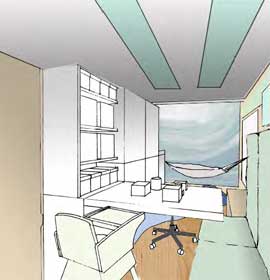
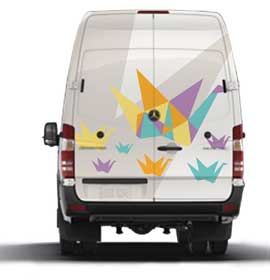
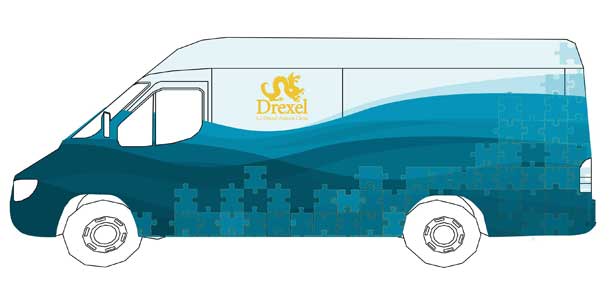
The A.J. Drexel Autism Institute at Drexel University now has a mobile autism clinic, designed inside-out by students from the Antoinette Westphal College of Media Arts & Design. The vehicle will support diagnosis and intervention efforts in under-served communities in the Philadelphia (USA) region. Read more about it here at the Drexel University site.

With the A.J. Drexel Autism Institute’s particular focus on public health, we wanted to be able to bring the best ideas from research to diverse communities – rolling out these vehicles will help promote engagement with diverse communities. [Dr. Craig Newschaffer, director of the Institute and a professor in Drexel’sSchool of Public Health]