Author: Editor (unless reblogging - then check original post for author)
Different Types of ASDs: What Do Co-Occurring Conditions Have to do With It?

By Alycia Halladay, PhD
ASF Chief Science Officer
If you missed it, on Tuesday the workgroup on Under-Recognized Co-Occurring Conditions in ASD of the Interagency Autism Coordinating Committee met to discuss the current issues and start to lie out a research agenda. This workshop was aimed to have an honest exchange of views to help direct research – the IACC does not directly fund research itself. It’s a way for researchers and funding agencies to discuss priorities and opportunities. The meeting was webcast live and will be archived on the NIH webpage, when the link is live we’ll post it. In the meantime here is what was discussed.
From the very first set of presentations it was clear that this issue is, like everything else is autism, complicated and messy. Four different presenters using different datasets all showed consistent findings of an increase in neurological (seizure), gastroenterological (GI distress) and…
View original post 543 more words
Nordstrom Guide to Men’s Everyday Dressing

If you’d like other options, here’s a list of 14 Most Popular Books on Men’s Style, Grooming, & Etiquette by Jacob J. Morris, another useful source of advice.
Autism Assessment and Education Planning for Children
Natalia Berdys: The Web Experience in the Autistic Spectrum
How Long To Nap For The Biggest Brain Benefits .

Taking a nap, we’ve seen time and again, is like rebooting your brain. Everyone likes to get a quick nap in every now and then, but napping may be as much of an art as it is a science. The Wall Street Journal offers recommendations for planning your perfect nap, including how long to nap and when.

The sleep experts in the article say a 10-to-20-minute power nap gives you the best “bang for your buck,” but depending on what you want the nap to do for you, other durations might be ideal. For a quick boost of alertness, experts say a 10-to-20-minute power nap is adequate for getting back to work in a pinch.
For cognitive memory processing, however, a 60-minute nap may do more good, Dr. Mednick said. Including slow-wave sleep helps with remembering facts, places and faces. The downside: some grogginess upon waking.
“If you take it…
View original post 198 more words
Children with autism have extra synapses in brain.
Children and adolescents with autism have a surplus of synapses in the brain, and this excess is due to a slowdown in a normal brain “pruning” process during development, according to a study by neuroscientists at Columbia University Medical Center (CUMC). Because synapses are the points where neurons connect and communicate with each other, the excessive synapses may have profound effects on how the brain functions. The study was published in the August 21 online issue of the journal Neuron.
A drug that restores normal synaptic pruning can improve autistic-like behaviors in mice, the researchers found, even when the drug is given after the behaviors have appeared.
“This is an important finding that could lead to a novel and much-needed therapeutic strategy for autism,” said Jeffrey Lieberman, MD, Lawrence C. Kolb Professor and Chair of Psychiatry at CUMC and director of New York State Psychiatric Institute, who was not…
View original post 733 more words
SleepTracker: Wake Up Naturally
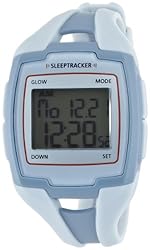 Many autistics have trouble sleeping well, and it doesn’t help if your alarm rings in the middle of a sleep cycle, when you’re in deep sleep. Getting up from deep sleep can leave you feeling washed out for the rest of the day. The SleepTracker is a watch you wear in bed, that tracks arm movements with an accelerometer. You can set it to wake you within a time window (say, 20 mins before or after 8 AM), and based on your movements, it will buzz when you are more likely to be in shallow sleep, and therefore more likely to feel rested after waking. Here’s a review of the SleepTracker Elite by DadsOnTech (this review is for the 2012 model, which has since been upgraded).
Shop Online for Sensory-Friendly Clothing
 Sensitivity to seams, tags, tight elastic bands and rough fabrics is a problem for many autistics, and some enterprises have stepped forward to make clothes that minimize such irritations. Unfortunately, most of these brands cater only to children, but hopefully more will see the commercial value of creating comfortable clothes for everyone. Who really wants to rub against seams and tags anyway? For now, here’s a list of 8 online stores that supply sensory-friendly clothing (including some for adults). BTW, a little tip on footwear from Eileen Parker, designer of the Cozy Calm Weighted Blanket:
Do get skater (skateboarding) shoes. I have a pair of black VANS and a pair of brown and pink Etnies, and both are über comfortable. Also, since with my sensory processing disorder, I wear the skater shoes because they are flat and stable on the bottom with good support on the inside so I don’t lose my balance as often.

Diuretic drug prevents autism in mice and rats.
Rodent study supports controversial clinical trial showing beneficial effects in children with the disorder.
Children with autism typically begin showing obvious symptoms, such as trouble making eye contact and slow language development, a year or more after birth. A study in mice and rats now hints that prenatal drug treatment could head off these problems.
The findings, reported today in Science1, do not suggest that autism spectrum disorders can be prevented in children. But researchers not involved in the study say that they add support to a controversial clinical trial suggesting that some children with autism benefited from taking a common diuretic medication called bumetanide2.
In that trial, a team led by neuroscientist Yehezkel Ben-Ari at the Mediterranean Institute of Neurobiology in Marseille gave 60 children bumetanide or a placebo daily for three months. Children who had less severe forms of autism showed mild improvements in…
View original post 525 more words
 DESIGN FOR ASD