Many autistic individuals are visual learners, who think and express themselves better in pictures than words (with the notable exception of people with NLD, for whom the opposite is usually true). Google has developed Project Spectrum as a way to give people with autism the opportunity to express their creativity and develop useful (potentially marketable) skills using Google SketchUp 3D modeling software. Drawing can be difficult for some autistics, who may find SketchUp a viable alternative to realise their potential as artists and designers. Learn more at http://sketchup.google.com/spectrum/
design
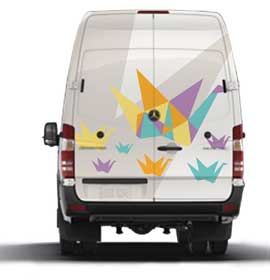
Mobile Autism Clinic Designed by Students
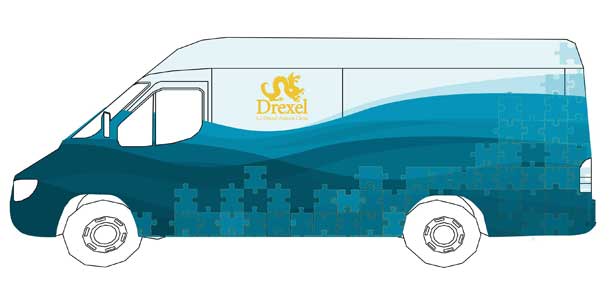
With the A.J. Drexel Autism Institute’s particular focus on public health, we wanted to be able to bring the best ideas from research to diverse communities – rolling out these vehicles will help promote engagement with diverse communities. [Dr. Craig Newschaffer, director of the Institute and a professor in Drexel’sSchool of Public Health]
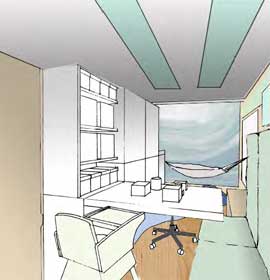
Chair Designed for Autistic Users
 Rocking is one of the therapeutic calming activities recommended for those with autism. This bowl-shaped chair, designed at the Victoria University of Wellington, also provides some insulation from sensory overload which autistics are prone to. The chair is designed to be flat-packed for self-assembly, and is currently at the concept stage. Find out more on the designers’ website.
Redesigning for Peak Oil
A little reminder that design isn’t just about good looks. The world is facing a future of depleted oil reserves, which (baring the discovery of a viable alternative fuel, still nowhere in sight) means the end of the petroleum-based paradigm of infinite economic growth driven by frenzied mass-consumerism. The alternative we face is the ‘3S economy’ geared towards (if we’re lucky) Survival, Subsistence and Sustainability.
The only rational response to the end of the cheap oil is to redesign all aspects of our lives [Bulent Gokay, Professor of International Relations, Keele University]
No more flying mangoes halfway round the world to satisfy the tropical fruit cravings of Norway, or assembling cars in Mexico to be sold in Singapore from parts made in China. Globalization was premised on cheap oil, the future is Local (or at most ‘Glocal’, where information crosses borders via the Internet, but anything physical stays at home). The future is also likely to use less plastic, because most plastics are petroleum-based and energy-intensive, and will cost a lot more. Designers will have to think harder about how products are made, what they’re made of, and how much (of what kind of) energy they consume. In others words, designs will have to survive the demands and rigours of the 3S Economy. More about that in this article, Past Peak Oil: Life After Cheap Fossil Fuels by Bulent Gokay. For the audio-visually inclined, here’s a video [courtesy of incubate pictures, I’d take the title with a pinch of salt]. There’s also a nice flash presentation on the topic here by the Club of Rome, in the larger context of global resource depletion.

